



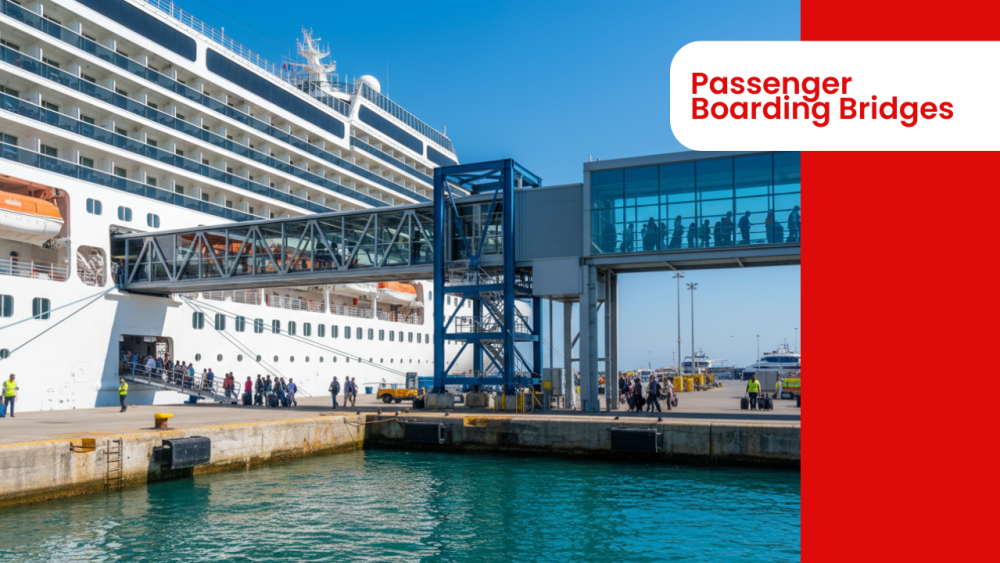
In cruise and ferry terminals, boarding is one of the most critical moments, both operationally and in terms of passenger perception. The passenger boarding bridge (PBB), also known as a port boarding bridge, connects the terminal with the vessel and must therefore guarantee maximum safety, accessibility, and comfort.
The growth of maritime passenger traffic —driven by the expansion of the cruise industry and the consolidation of ferries as a sustainable and efficient means of transport— demands solutions adapted to different vessel types and port conditions.
Passenger boarding bridges: function and key requirements
Passenger boarding bridges are not just passageways: they are critical infrastructures that ensure safe and efficient transit between the terminal and the ship.
Key functions of a passenger boarding bridge include:
- Structural safety: supporting dynamic loads and adapting to ship movements.
- Flexibility: enabling operations with different vessel types and sizes.
- Protection: against adverse weather conditions.
In addition, they must comply with international safety and accessibility standards, ensuring that all passengers, including those with reduced mobility, can board comfortably.
The three key factors of passenger boarding bridges
Safety as the fundamental pillar
Safety is the number one priority in any dock-to-ship access operation. For passenger boarding bridges, this means:
- Robust and stable structures: designed to withstand variable loads and emergencies.
- Active safety systems: including safe retraction mechanisms, alarms, and backup power supply.
- Protective enclosures: shielding passengers from rain, wind, or heat, while ensuring continuous operations
These features make boarding bridges essential for minimizing risks and ensuring safe operations in high-traffic terminals.
Comfort and accessibility: a seamless boarding experience
Passenger comfort is not just an extra, it is a competitive advantage for terminals. A modern boarding bridge incorporates:
- Universal accessibility: guaranteeing passage for persons with reduced mobility.
- Ergonomic design and climate control: offering a pleasant experience even in extreme weather.
- High-capacity transit management: with wide corridors designed to handle thousands of passengers boarding a cruise ship.
In this way, the boarding bridge is not only a technical asset but also the first impression passengers have of the terminal.
Adaptability to cruises and ferries: tailored solutions
The design of port boarding bridges varies depending on the type of terminal:
- Cruise terminals require versatile bridges, adaptable to vessels of different lengths and heights, while managing large passenger flows in short timeframes.
- Ferry terminals prioritize fast embarkation and disembarkation, with more functional bridges designed for frequent, regular traffic.
In both cases, Prosertek’s modular and customized solutions allow ports to optimize their resources and guarantee efficient, safe operations.
Boarding bridges as a strategic investment
Passenger boarding bridges are much more than a physical link between ship and terminal: they are a strategic point of safety and comfort that directly impacts passenger experience and terminal efficiency.
Investing in safe, adaptable, and comfortable boarding bridges represents a competitive advantage for cruise and ferry ports, reinforcing their position in a sector that continues to grow.
Comments are closed.