



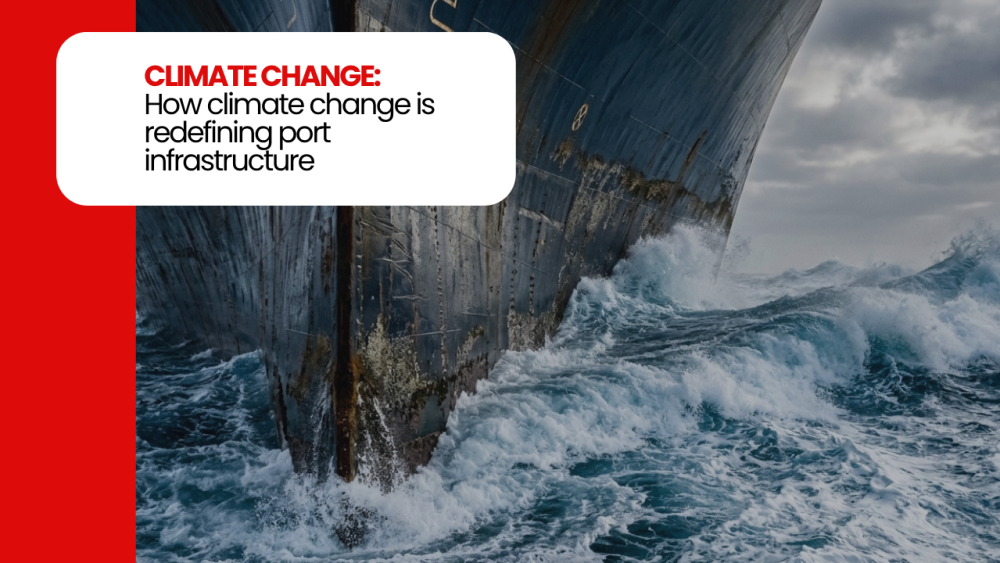
Ports were built for environmental conditions that are becoming less predictable. Rising sea levels, stronger storms, and the steady increase in vessel size are creating new operational challenges for marine infrastructure worldwide.
Many ports now face conditions that exceed the assumptions used decades ago during the original design of berths, mooring systems, and protection structures.
Climate-resilient port infrastructure is therefore becoming a growing priority for port authorities and terminal operators seeking to maintain safe and reliable operations over the long term.
The new risks facing port infrastructure
- Larger vessels generate greater berthing energies and higher loads on mooring and fender systems. Combined with more frequent severe weather events, these conditions can accelerate structural fatigue, corrosion, and equipment wear.
- Progressive degradation often develops over years of continuous operation, particularly in highly corrosive marine environments. Aging fender systems, outdated mooring equipment, and insufficient monitoring capabilities can increase maintenance requirements and operational risk over time.
- Infrastructure downtime also carries significant operational consequences. Even temporary disruptions may affect vessel scheduling, cargo operations, and terminal productivity, particularly in ports operating under tight logistical demands.
What climate-resilient ports are doing differently
Ports investing in long-term resilience are increasingly prioritizing infrastructure designed to perform reliably under more demanding environmental and operational conditions. Common measures include:
- Implementing higher-performance fender systems capable of absorbing greater berthing energies generated by larger vessels.
- Improving monitoring and inspection capabilities to better assess infrastructure condition over time.
- Incorporating smarter berthing and mooring technologies to support safer operations under variable weather and sea conditions.
- Using operational data and load monitoring systems to help identify abnormal stresses and support preventive maintenance planning.
Designing ports for the next 30 years
Future port infrastructure design will likely require greater flexibility and a stronger focus on lifecycle performance. As environmental and operational conditions continue to evolve, ports may need infrastructure capable of adapting without requiring complete replacement of existing assets.
For terminal operators and port authorities, resilience increasingly represents an operational requirement rather than a long-term consideration.
To learn more about marine and port infrastructure solutions designed for demanding operational environments, contact our team.
Comments are closed.