


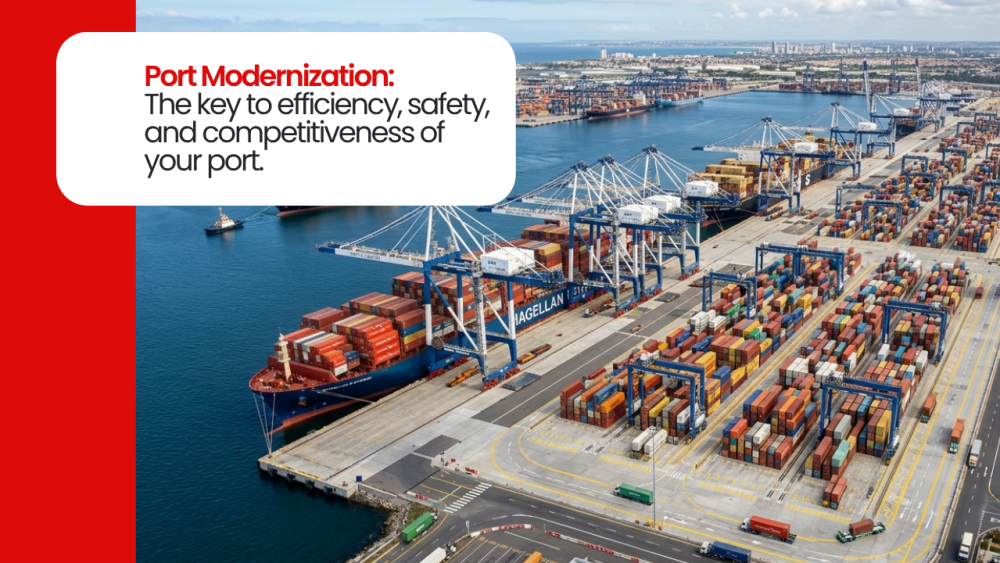
In an increasingly competitive global maritime market, the evolution of port infrastructure is no longer a luxury but a necessity for operational survival. Leading organizations like Prosertek, with over 30 years of international experience, emphasize that staying ahead requires a shift toward advanced, integrated technological solutions.
Why Modernization is Necessary Today
The demand for port modernization is driven by the increasing complexity of maritime operations and the need for higher precision in vessel handling. Today’s ports must integrate sophisticated hardware with advanced software systems to manage everything from docking to passenger boarding. As global trade routes expand into regions like Oceania and the Americas, infrastructure must meet international standards of quality and reliability to remain a viable link in the supply chain. Furthermore, the introduction of specialized equipment, such as Docking Aid Systems (BAS) and Portable Pilot Units, has set new benchmarks for what defines an efficient modern port.
Risks and Problems of Not Modernizing
The refusal to modernize carries significant operational and financial risks. Legacy infrastructure is often prone to hidden defects; for instance, aging bollards may have compromised anchors that are not visible to the naked eye, leading to potential catastrophic failure during mooring. Without proactive modernization, ports face:
- Increased Safety Hazards: Submerged structures and vessel hulls can degrade without regular underwater maintenance and inspection.
- Operational Inefficiency: Outdated manual systems lack the precision of modern Berthing Aid Systems, leading to slower turnaround times.
- Higher Long-term Costs: Relying on external dependencies for repairs or failing to coordinate engineering projects can lead to significant cost increments.
Benefits of Early Modernization and Prosertek’s Expertise
Early modernization allows port authorities to transition from reactive repairs to a strategy of lifecycle extension and refurbishment. By utilizing Technical Assistance Services (SAT) and non-destructive testing, ports can certify the state of their current equipment, such as bollards and their surfaces, extending their usable life rather than opting for costly, premature replacements.
Prosertek offers a comprehensive, “turnkey” approach to modernization, covering the entire process from initial engineering and design to manufacturing and final installation. This global service model ensures:
- Enhanced Safety: Through the installation of state-of-the-art Quick Release Hooks integrated with a Berthing Aid System (BAS) and high-quality fenders.
- Improved Reliability: Continuous training and in-house R&D+i allow for the development of software that optimizes the integration of different hardware modules.
- Maximized Efficiency: Telescopic gangways and passenger boarding bridges streamline port-to-ship transitions, ensuring smoother operations.
By choosing to modernize through expert engineering and specialized maintenance, ports can secure a more reliable, safe, and efficient future while significantly reducing the risk of unexpected downtime.
Comments are closed.